The Core of Material Handling
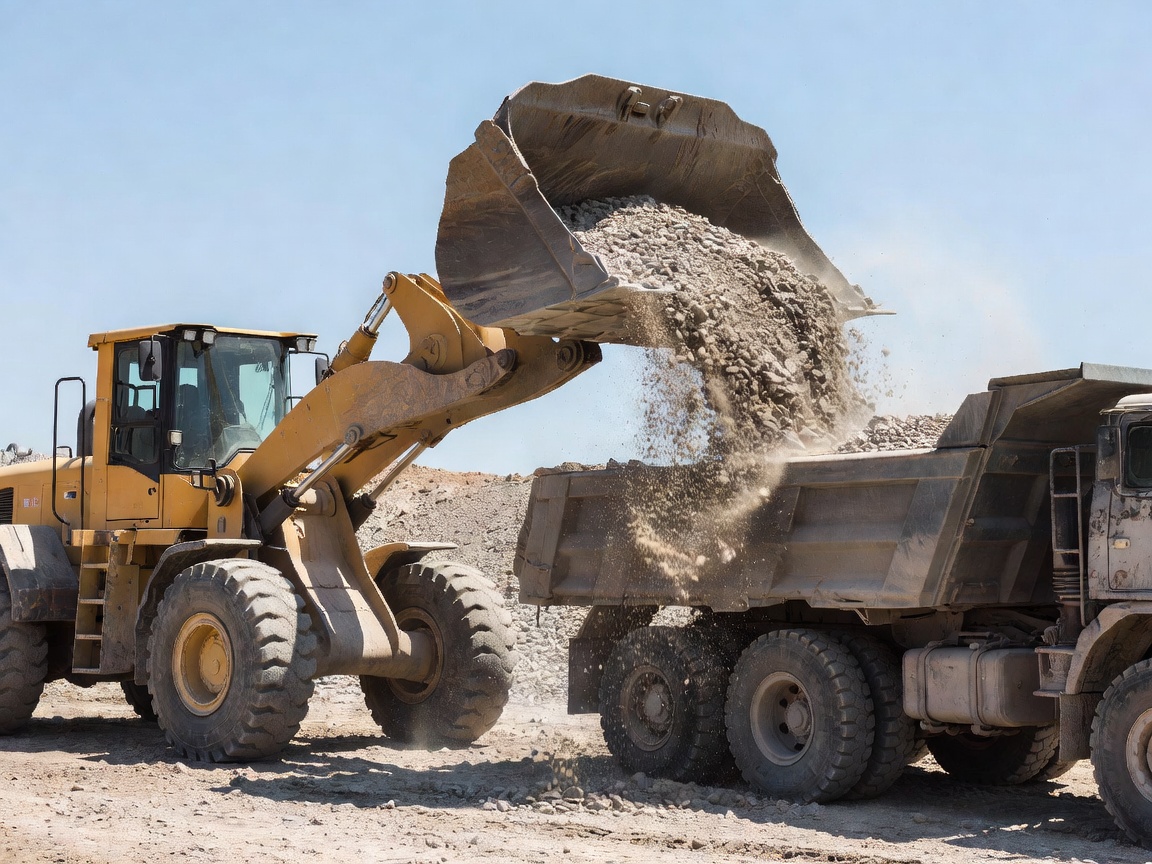
In heavy construction, quarrying, and municipal works, loaders serve as the primary vascular system of the site. Their primary function is to scoop, lift, transport, and load loose materials—dirt, gravel, sand, demolition debris, or snow—into trucks, hoppers, or stockpiles. Unlike excavators which are predominantly stationary diggers, loaders are highly mobile cycle-machines reliant on traction and hydraulic lifting geometry.
Selecting the right loader requires balancing bucket capacity against maneuverability. An oversized loader in a constrained environment will suffer severe productivity losses due to constant repositioning, while an undersized loader will burn through excessive cycles and operator hours to hit production quotas.
Major Loader Classes
Wheel Loaders
Wheel loaders are articulated, heavily built machines driven by four large tires. They range from compact yard loaders to massive mining models capable of filling a 100-ton haul truck in a few passes. Their articulated steering (the front and rear halves pivot in the middle) gives them a tighter turning radius than rigid-frame vehicles.
- Pros: High travel speeds between stockpiles; excellent visibility; superior tire lifespan on hard surfaces compared to tracks.
- Cons: Tires are susceptible to punctures in demolition environments unless equipped with expensive solid or foam-filled variants. Reduced traction in deep mud.
Compact Track Loaders (CTL)
CTLs share the core chassis design of a skid steer but replace the wheels with a dedicated rubber track undercarriage. They have become the fastest-growing segment in the light equipment market.
- Pros: Extremely low ground pressure prevents rutting in landscaping applications; exceptional pushing power and stability on slopes.
- Cons: Higher initial purchase price and significantly higher undercarriage maintenance costs compared to wheeled skid steers.
Skid Steer Loaders
The traditional skid steer operates using four wheels that are mechanically locked in synchronization on each side. Turning is achieved by driving one side faster than the other, causing the tires to skid across the ground.
- Pros: Unbeatable maneuverability with a zero-degree turning radius. Cost-effective to maintain due to simple tire configurations.
- Cons: Very rough ride for the operator. High ground pressure makes them unsuitable for soft, wet ground.
Critical Payload and Performance Metrics
Loader spec sheets revolve around tipping loads and hydraulic capacities. Understanding these limitations is critical for safe operation.
| Specification | What It Means | Safety & Productivity Implication |
|---|---|---|
| Tipping Load (Straight) | The weight in the bucket that causes the rear wheels to lift when the machine is facing straight forward. | Safety baseline. Never operate near the tipping load. |
| Rated Operating Capacity (ROC) | Generally calculated as 50% of tipping load for wheeled loaders, and 35-50% for tracked loaders. | The actual safe working limit for continuous, everyday operation. |
| Dump Clearance | The height of the bucket hinge pin when fully raised. | Determines which class of dump trucks or hoppers the machine can successfully load. |
| Breakout Force | The maximum rollback force generated by the tilt cylinders. | Essential for prying compacted materials from a bank or stockpile. |
Tire and Track Selection
On wheel loaders, tire selection profoundly impacts operational cost. L2 tires offer maximum traction in dirt, L3 tires are general-purpose rock/dirt hybrids, while L4 and L5 tires feature massive tread depth for severe rock and demolition applications where puncture resistance is paramount.
For compact track loaders, operators must choose between block-tread patterns (good all-around traction) and bar-tread patterns (maximum pushing power in mud but terrible on hard surfaces). Track width also dictates ground pressure—wider tracks float better but induce higher stress on the drive motors during tight turns.