Hauling Capacity and Economics
Dump trucks (or haulers) represent the high-volume transport division of any earthmoving operation. While excavators and loaders gather the material, production grinds to an absolute halt if the hauling fleet cannot keep pace. The economics of bulk material transport dictate that you must perfectly match your truck fleet's volume to the bucket size and cycle time of your loading equipment. Too few trucks, and the excavator sits idle; too many trucks, and costly assets queue uselessly at the loading point.
Heavy off-road haulers differ significantly from the commercial on-highway dump trucks seen in suburban construction. They are engineered to carry extreme payloads over brutal, unpaved terrain without fracturing their frames or destroying their drivelines.
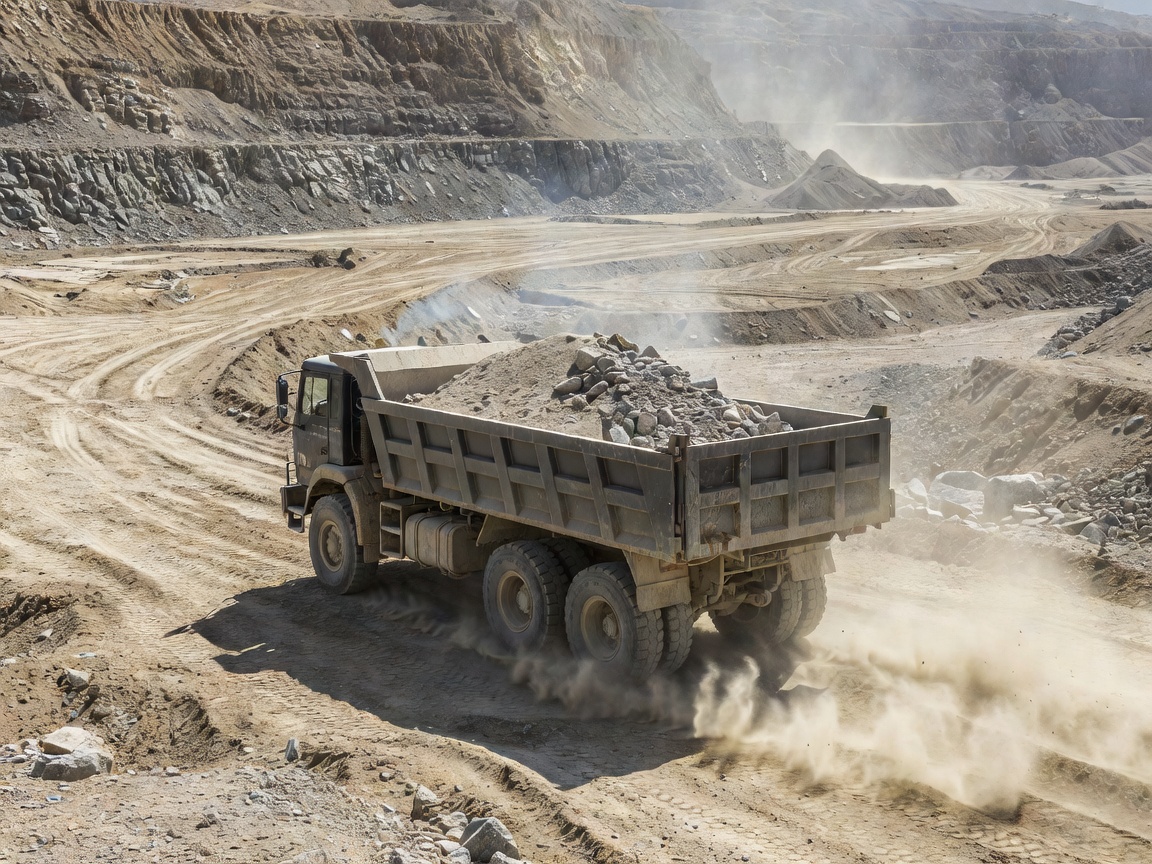
Articulated vs. Rigid Frame Haulers
The off-road hauling sector is divided into two distinctly engineered architectures, each serving completely different ground conditions.
Articulated Dump Trucks (ADTs)
An ADT features a hinge between the cab and the dump box, allowing the two halves to move independently. Furthermore, they feature an oscillating hitch that allows the front and rear axles to twist relative to each other, keeping all wheels on the ground over severe ruts.
- Pros: Unmatched off-road capability. Six-wheel drive and differential locks allow ADTs to operate in deep mud, steep grades, and atrocious weather conditions where rigid trucks would become hopelessly stuck.
- Cons: Lower maximum payload capacity compared to rigid trucks. More complex drivetrains lead to higher maintenance costs. Higher center of gravity requires care when dumping on uneven ground.
Rigid Frame Dump Trucks
Rigid haulers utilize a single, massive, inflexible chassis. The steering is conventional (front wheels pivot). These are the leviathans of the open-pit mining and large-scale quarrying world.
- Pros: Massive payload capacity (ranging from 40 tons to over 400 tons). Lower cost per ton of material moved when operating on well-maintained haul roads. Faster top speeds on flat, graded surfaces.
- Cons: Strictly require wide, hard-packed, well-maintained haul roads. They perform terribly in mud or on soft ground due to immense ground pressure and conventional rear-wheel drive.
Payload Metrics and Body Configurations
When evaluating dump trucks, the payload is measured in two ways: Weight (Tons) and Volume (Cubic Yards/Meters). Depending on the density of the material being hauled, a truck may volume-out before it weights-out (e.g., hauling dry topsoil), or weight-out before it volumes-out (e.g., hauling dense granite boulders).
| Body Type | Characteristics | Ideal Material |
|---|---|---|
| Standard Rock Body | Heavy steel plating, sloped rear, high impact resistance. | Blasted rock, large boulders, heavy abrasive aggregate. |
| Lightweight/Coal Body | Thinner steel or aluminum, massive volumetric capacity. | Low-density materials like coal, fly ash, or light topsoil. |
| Ejector Body | Uses a hydraulic ram to push material out the back instead of raising the bed. | Sticky clay, wet mud, or areas with low overhead clearance (e.g., tunneling). |
| Heated Box | Routes engine exhaust gases through channels in the dump bed. | Prevents frozen material or sticky clay from adhering to the bed in cold climates. |
Operational Safety: The Dumping Cycle
The most dangerous phase of hauler operation is the dumping cycle. As the hydraulic hoist raises the massive bed into the air, the center of gravity shifts drastically upward and backward. If the truck is articulated at an angle, or parked on soft/uneven ground, the raising of the bed can easily result in a lateral roll-over. Modern haulers incorporate inclinometers that prevent the bed from raising if the chassis angle exceeds safe engineered limits.