The Force Behind Earthmoving
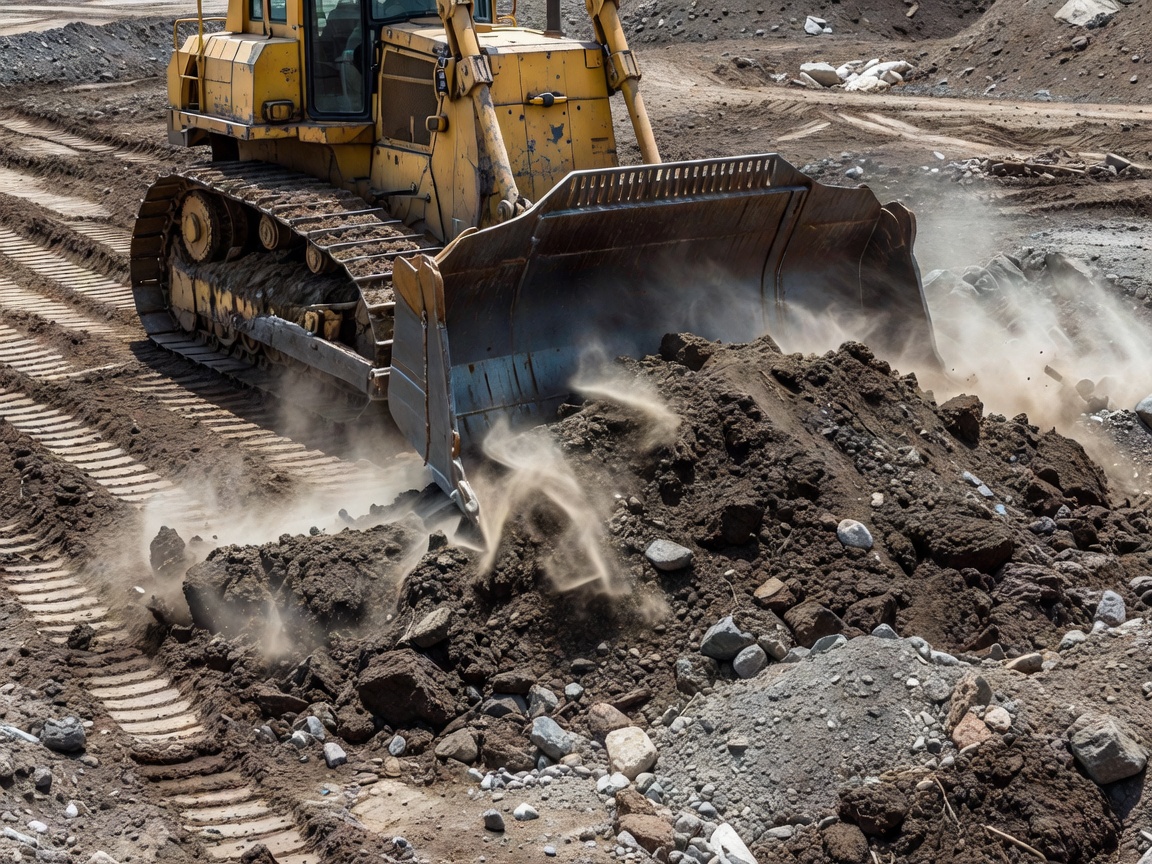
Bulldozers (or simply dozers) represent pure pushing power. Unlike excavators that dig and loaders that carry, dozers are engineered to shear, push, and spread vast quantities of material over short to medium distances. The combination of massive weight, continuous tracks, and a heavy frontal blade makes them the apex machine for site clearing, rough grading, and ripping hardpan earth.
Modern dozers are increasingly sophisticated, integrating advanced hydrostatic transmissions and GPS/laser-guided grading systems that transform a brute-force instrument into a millimeter-accurate finishing tool.
Crawler vs. Wheel Dozers
Crawler Dozers
The quintessential bulldozer. Crawler dozers utilize heavy steel tracks and robust undercarriages to maximize ground contact. Because their weight is spread across a large footprint, they maintain traction where wheeled machines would spin out.
- Pros: Superior traction, ability to push tremendous loads, exceptional capability on steep slopes and uneven, rocky terrain.
- Cons: Slow travel speeds. The steel tracks damage pavement. High undercarriage wear and replacement costs in abrasive conditions (like sand).
Wheel Dozers
Wheel dozers are generally larger machines mounted on massive, heavily ballasted tires. They operate more like a wheel loader equipped with a dozer blade rather than a bucket.
- Pros: Excellent mobility across large mining or aggregate sites; less destructive to paved haul roads; much faster reverse speeds for rapid cycling.
- Cons: Lower tractive effort compared to tracks in loose soil. Not suitable for pioneering fresh, muddy terrain or heavy forest clearing.
Blade Selection: Geometry Matters
A dozer's capability is heavily dictated by its blade geometry. Selecting the wrong blade can result in continuous material spillage, wasted fuel, and increased wear on the machine.
| Blade Type | Shape Profile | Best Application |
|---|---|---|
| S-Blade (Straight) | Short, with no lateral curve or side wings. | Fine grading, stumping, ditching, and handling highly compacted material where penetration is more critical than capacity. |
| U-Blade (Universal) | Tall and heavily curved with large side wings. | Pushing massive loads of loose, non-cohesive material (like coal, wood chips, or loose dirt) over long distances with minimal side-spillage. |
| S-U Blade (Semi-U) | Slightly curved with short side wings. | The industry standard hybrid. Excellent for general purpose dirt-moving, balancing penetration force with carrying capacity. |
| PAT Blade (Power Angle Tilt) | Fully adjustable hydraulically across all axes. | Finish grading, backfilling trenches, and fine contouring. Mostly found on small to medium finish dozers. |
Rear Attachments: Rippers and Winches
While the blade handles the front, the rear of a dozer is equally critical. For land clearing operations in forestry, a heavy-duty winch is essential for pulling timber and rescuing bogged machines. In earthmoving and mining, a ripper is attached to the rear.
Rippers are massive steel claws driven hydraulically into the earth to fracture hardpan, frozen ground, or sedimentary rock, allowing the blade to then push the loosened material. Single-shank rippers provide maximum penetration depth for the hardest materials, while multi-shank rippers fracture softer top-layers over a wider area.
Undercarriage Configurations
The undercarriage of a crawler dozer represents nearly 50% of its lifetime maintenance cost. Standard configurations are designed for hard ground. However, LGP (Low Ground Pressure) undercarriages utilize much wider track shoes and longer track frames to float the machine over swamps, peat, and deep mud, preventing it from sinking into oblivion.